It isn't personal. Mostly.
The short version
Your cat is built for dawn, and your house pays them for the noise.
Change the routine, not the cat. Expect it to get worse before it gets better.
If the crying is new, or your cat is older, see a vet first.
Built for twilight
Cats are crepuscular. Their bodies are tuned to be most alert around dawn and dusk, when the small creatures they evolved alongside are moving. Nobody told them about alarm clocks.
An indoor cat also sleeps a great deal, often twelve to sixteen hours a day, and much of that happens while you are out. By the time the house goes quiet, your cat has had a full day's rest and nothing to spend it on. The small hours are simply when their day begins.
Three in the morning isn't dawn, of course. But a cat that is already awake notices everything: a car outside, a bird starting early, you turning over. You, it turns out, are the most interesting thing in the room.
A voice made for you
Adult cats rarely meow at one another. Among themselves they rely on scent, posture and the occasional hiss. The meow is mostly a sound they keep for people, refined over years of watching which version gets results.
That is why every cat's 3 a.m. call sounds slightly different. A short chirp is usually a greeting. A long, rising yowl is a demand. A low, drawn-out moan in an older cat can mean something else entirely, which we'll come to.
Screaming is rarely the whole campaign, either. Paws on your face, a slow walk across your chest, the careful removal of objects from the bedside table. These are the same message in a different language, and they follow the same rules.
The breakfast contract
Hunger is the most common reason, and it is rarely about going without. In the wild, cats eat many small meals across the day and night. A cat fed twice a day can reach the early hours with an empty stomach and a very clear idea of who is responsible.
Then comes the learning. If the noise ends with food, a cuddle or even a tired voice telling them to be quiet, the noise has worked. Cats are excellent at noticing what works.
The part most people miss is that giving in sometimes is worse than giving in always. A reward that arrives now and then, unpredictably, teaches a cat to keep trying longer and louder, because the next attempt might be the one that pays. It is the same pull that keeps people at slot machines.
Every time you get up, you sign the contract again.
A quiet house is a boring house
A cat with nothing to chase, climb or watch during the day will look for entertainment at night. Single cats in homes where everyone works are especially prone to it. The screaming is often less a complaint than an invitation.
What actually helps
Play before bed. Spend ten to fifteen minutes playing with a wand toy in the evening. Let your cat chase, pounce and, at the end, catch. Then serve a small meal. Play, eat, groom, sleep is the sequence cats are built around, and following it tells the body the day is over.
Take yourself out of breakfast. A timed feeder set for early morning means food arrives on schedule without you. Once you stop being the source, you stop being the target.
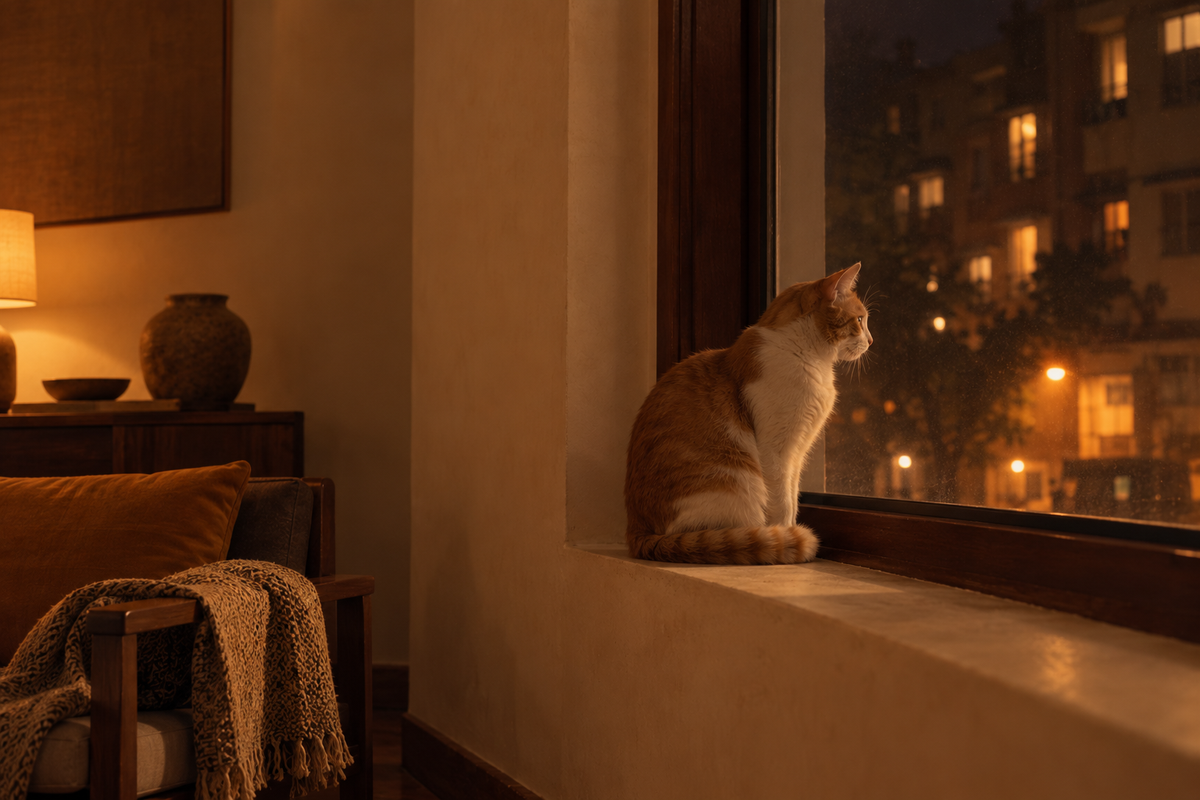
Give the day something to do. A window perch with a view, a puzzle feeder instead of a bowl, a few toys rotated so they feel new. A cat that has spent their energy in daylight has less to spend on you.
Don't answer. At all. No food, no talking, no pushing them off the bed with a sigh. Any response counts as a response.
Worth knowing
When a reliable trick stops working, cats usually try it harder before they give it up. Behaviourists call it an extinction burst. For a week or two, nights may get louder. That is the sign it's working. Giving in now teaches your cat that louder is the answer.
Skip the telling off. Water sprays and shouting make a cat anxious, and an anxious cat is rarely a quieter one. They may also decide that your attention, even the angry kind, was worth it.
A closed door is fine, if you mean it. Shutting the bedroom works for some homes, as long as the rest of the house has water, a litter box and somewhere comfortable to sleep. Opening it after twenty minutes of scratching teaches the lesson you were trying to avoid.
If there are two of them
Sometimes the noise isn't aimed at you at all. Two cats chasing each other through the hallway at night are often just playing, and it tends to settle as they get older. But if one cat is crying at a closed door, guarding a room, or waking you after a squabble, look at the daytime. Tension between cats often shows up at night, when the house is quiet and the humans are out of the way. Separate feeding spots, more than one litter box and a few high places to retreat to usually help.
When it isn't behaviour
Sudden night-time crying in a cat that used to sleep through deserves a vet visit before any training plan. This matters most in cats over about ten.
An overactive thyroid can make a cat hungry, restless and loud, often while they lose weight. High blood pressure, which frequently travels with thyroid or kidney disease, can affect a cat's eyesight and leave them disoriented in the dark. Arthritis pain tends to show up at night, when a cat is stiff and still. Some older cats develop age-related confusion, much like dementia, and cry because they feel lost. Cats that are losing their hearing often get louder without realising it.
Cats that haven't been spayed or neutered have their own reason. A female in heat will call, loudly and often, and a male nearby will answer. Neutering usually ends it.
None of these are things to fix with a feeder. All of them are things a vet can help with, and several are much easier to treat when caught early.
The long game
Most cats settle within two to four weeks of a steady routine. The play, the late meal, the feeder and your silence, every single night. Consistency is the whole trick. Cats respect a system, even one they didn't design.
Louder rarely ends it. A calm, steady routine almost always does.
Sources
- Cornell Feline Health Center, Cornell University College of Veterinary Medicine: Cognitive Dysfunction
- VCA Animal Hospitals: Hyperthyroidism in Cats
- AAHA/AAFP Feline Life Stage Guidelines (2021)
Checked against published veterinary guidance. It is general information, not a substitute for your vet.
Catlas entries are general guidance, not a substitute for your veterinarian.