Cats come from dry places and drink like it.
The short version
Cats have a weak urge to drink. It's inherited, not stubbornness.
Moving water, more bowls and wet food all help.
A cat suddenly drinking much more than usual needs a vet check.
A desert inheritance
The wild ancestors of the house cat lived in dry country and got most of their water from what they ate. They never needed a strong thirst drive, and neither do their descendants. Many cats simply don't drink much, even when they could use more.
What a cat eats makes a large difference. Wet food is mostly water, around three-quarters of it. Dry food contains very little. A cat on dry food alone has to make up the difference at the bowl, and many don't.
What helps
More than one bowl. Put water in several places around the home, not only beside food. Some cats prefer to drink away from where they eat.
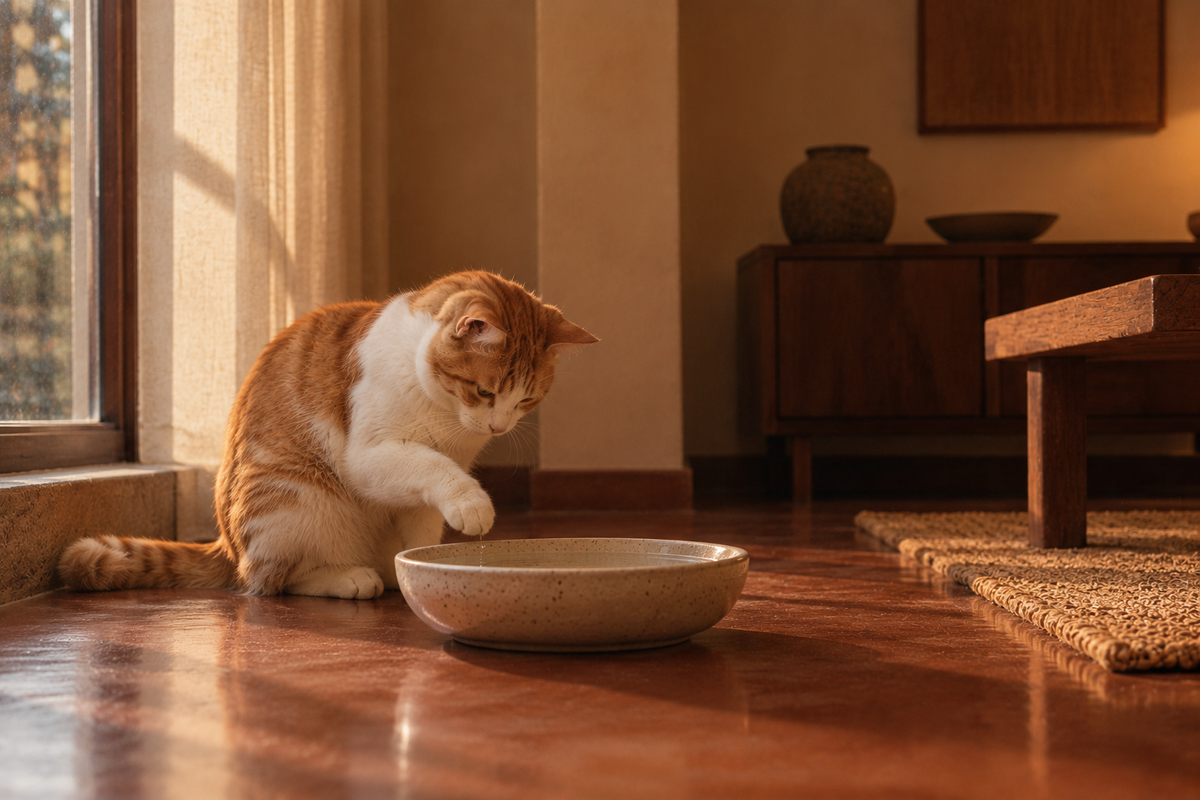
Wide and full. Many cats prefer a wide bowl filled to the brim, so they can drink without pushing their face deep into it.
Moving water. A water fountain appeals to a lot of cats, probably because running water reads as fresh. Clean it regularly, as the instructions say.
Fresh, every day. Change the water daily and wash the bowls. Cats notice stale water, and dust, and the faint smell of dish soap.
Water in the food. Wet food, or a little water added to a meal, is one of the easiest ways to get more fluid into a cat.
A cat will drink from your glass and ignore their own bowl. Take the hint: fresher, wider, higher.
Worth knowing
Drinking a lot more than usual, or bigger clumps in the litter box, is a sign to take seriously, especially in older cats. It can point to kidney disease, diabetes or an overactive thyroid, all of which a vet can test for and help with.
See a vet if
Your cat is drinking noticeably more or less than usual, has dry, tacky gums, seems lethargic, or has stopped eating. Don't try to diagnose thirst at home.
They will never admit they're thirsty. Make it easy for them anyway.
Sources
- International Cat Care: drinking and increased thirst in cats
Checked against published veterinary guidance. It is general information, not a substitute for your vet.
Catlas entries are general guidance, not a substitute for your veterinarian.